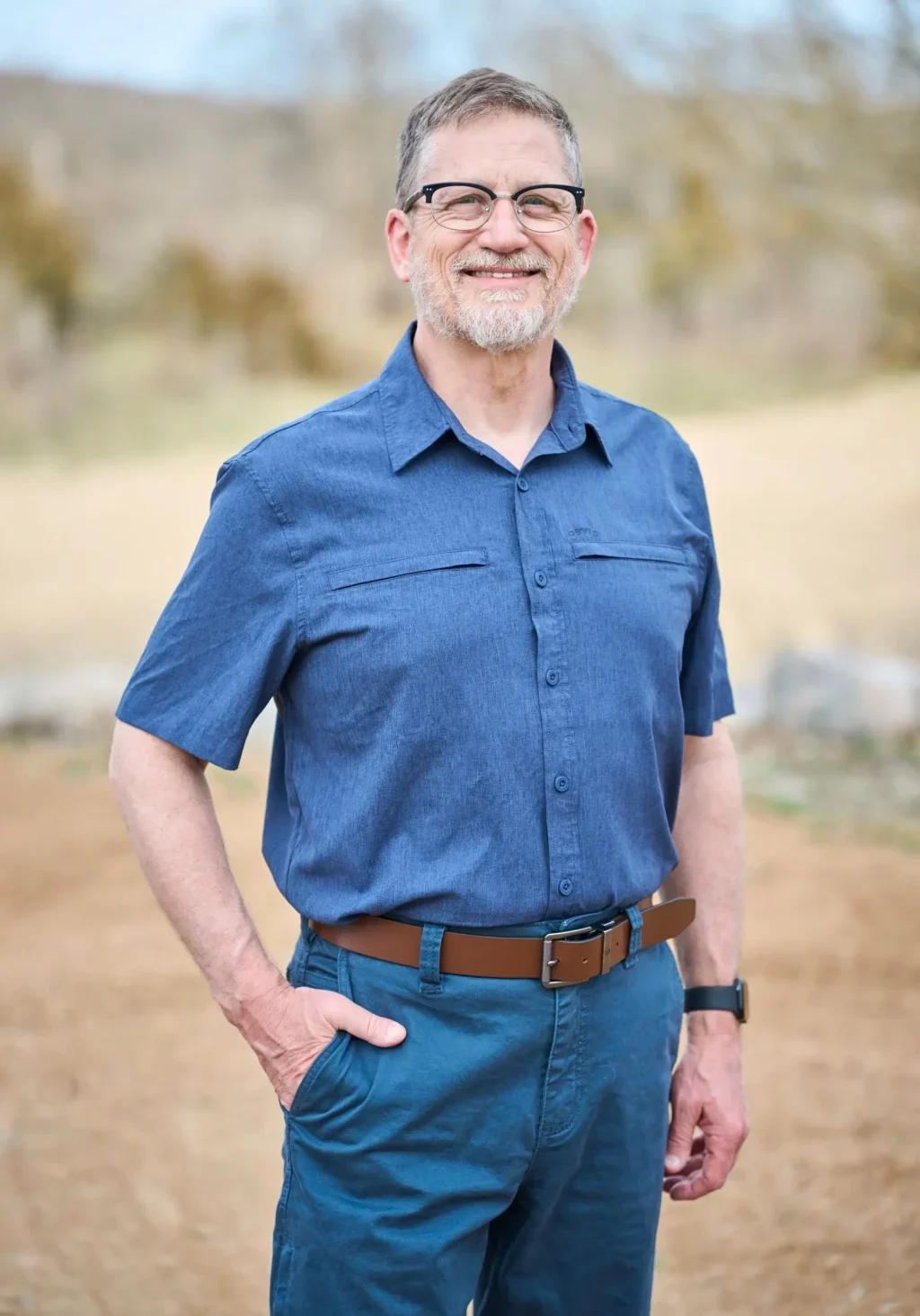
Meet Dan Kessler
I wasn't a great student...but teachers made a difference
My academic GPA was 1.94. I graduated because I weaseled my way into retaking a final, needed a 94 to pass the class, and got a 96. I went home, told my mom, my mom called my dad, and we met downtown that afternoon for the ceremony. That's how close it was.
I was the kid in the back of the room reading a book instead of paying attention, and I'd decided somewhere around 16 that school wasn't useful. I was wrong, but nobody's talking a 16-year-old out of that.
What changed it was two or three teachers who took time with me they didn't owe me. One of them wrote the recommendation letter that got me into college.
So when people ask why I care about public schools, that's the honest answer. It isn't sentimental. I know exactly what one teacher who cares is worth, because I wouldn't have a career without a few of them.
Then I spent thirty years listening to people for a living
I became a psychologist because I'm fascinated by how people think, and I never got over it. If you're lucky, you find something that interests you that you can also get paid for. I got lucky.
I've done it in a lot of settings: emergency services in a small farm town in Virginia, a private practice, sixteen years seeing patients in a big health system here in the southwest metro. A few years ago I opened my own practice. It runs out of a bedroom upstairs that used to be my son's.
I've also been on the other side of it. In one week, my doctor called on a Tuesday to tell me I had cancer, and called on a Friday to tell me I had a tumor in my brain. The brain tumor turned out to be the good news of the week, which tells you something about the week. I had surgery, I got treated, I got lucky again. I also learned what it's like to sit there terrified while somebody explains your options, and to find out that the system is hard to work even when you work inside it.
Why Chaska
We moved here Christmas Eve day, 2004. I came for the schools, and because I could afford a house in Chaska at the time. Both of those things were true then. Only one of them is still true, and that's most of why I'm running.
Here's what I mean about this place. For three years our front door lock was broken. Michelle knew it, I knew it, and every night we flipped it anyway, like it worked. We weren't worried about it. We only fixed it when we replaced the whole door.
That's the kind of community this is. I'd like people to be able to stay in it.
The house
Michelle bought her first house in Chanhassen when she was 28. Three bedrooms, two baths, nothing anybody would call fancy. We looked it up a few weeks ago out of curiosity.
Somebody that age today, with a graduate degree and a good job, cannot buy that house. Not in this market, not on a low six-figure income.
Every generation is supposed to hand the next one something a little easier. Cheaper, safer, a little less white-knuckled. This is the first generation in a long time getting handed something harder, and they're not delaying houses and kids because they've decided to. They're delaying because they've done the math.
That’s the result of a stack of decisions, a lot of which get made in St. Paul.
Starting a small business
People will tell you the barrier to starting a business is capital. For me it was health insurance. I'm 60 years old. There was no version of this where I quit a salaried job, started a practice, made no money for a while, and covered my own health care.
I could do it because Michelle has a union job with the state and I could get on her plan. I'm aware that's luck, and I'm aware most people don't have it.
Same thing with the state's paid leave program. I pay in a small share of my income, and what I get for it is this: if something happens to me, we can still pay the mortgage, we can still pay for college, we can still live our lives. That's not a handout. That's the difference between a person who can take a risk and a person who can't.
Brandondale
There's a neighborhood in Chaska called Brandondale, where you own your house but you rent the land underneath it. So you're a homeowner and a renter at the same time. Most people don't know that's how manufactured housing works until it matters.
Think about how a normal business runs. If you own a clothing store or you lay floor for a living, the model is to give people a good product at a fair price, make a profit, and keep the doors open for twenty years. You want the business alive so you can hire other people and grow. That's almost every business I've ever seen.
When an investment company buys a place like Brandondale, that isn't the model. They raise the lot rent. They cut back the services. They pull out as much as you can over five or seven years and you move on. And here's the trap: when the rent gets too high and people leave, they have to take their house with them, and moving a house costs more than most families have. So they sign it over.
I'm for people making money. What I have a problem with is a business model that only works if a family loses their house.
Last winter
In that same neighborhood during Operation Metro Surge, parents were afraid to walk their kids to the bus stop. So some of us went and stood at the bus stops in the mornings instead, so they didn't have to.
Most days there were two or three kids. Near the end of it I pulled up one morning and counted fifteen. That felt like maybe we could exhale.
My fear was not their fear. I got to go home at the end of it. I can't tell you what those months were like from the inside, and I'm not going to pretend I can. What I can tell you is that showing up mattered, and that it didn't take anything special to do it. It took being there.
One more thing, since it usually comes up
I don't think fraud is a partisan issue, and I don't think it gets less serious when the people responsible are on my side. Minnesota has had too many stories lately about public money going missing and not enough about anybody answering for it. If you send me to St. Paul, I'll vote for oversight when it's uncomfortable. That's the only kind that counts.
The rest of it
I curl. I've done so for years at the Chaska Curling Center, on a team called Hank's Boiler Repair.
I ran against Julia Coleman in 2022 and I'm running again because the problems I ran on before have only grown. Being a state senator is mostly showing up, telling people the truth, and doing the work to improve your constituents lives.
I can't promise you I'll get everything right. I can promise you I'll be there, I’ll listen, and that you'll hear it from me straight.
Join Us!
We all have a part to play in making our future in Carver County a brighter one.



Countdown to November 3
"Never confuse movement with action" --Ernest Hemmingway
Prepared and paid for by the Dan Kessler for Minnesota Senate Committee
PO Box 165, Chaska, MN 55318